
Kedarnath Dham is an important holy destination for the Hindus. It is considered to be the place where Lord Shiva is worshipped in the form of Kedarnath. It is also one of the twelve jyotirlingas that attracts devotees from all around the world. As per the Hindu beliefs, Pandavas built the temple and Adi Shankaracharya later restored it. If you’re visiting Kedarnath, weather is one of the most important factors that can have an impact on your travel experience.
Kedarnath Temple generally closes for the winter around October or November and reopens in April or May, with the exact dates determined by the religious calendar. During winter, heavy snowfall makes the high-altitude shrine inaccessible, and Lord Kedarnath’s winter worship is conducted at Omkareshwar Temple in Ukhimath.
What is the Best Time to Visit Kedarnath?
The best overall time to visit Kedarnath is generally May to June and September to October, when the temple is open and weather conditions are comparatively favourable. May and June are popular for the main pilgrimage season, while September and October can offer clearer post-monsoon conditions. July to mid-September can bring heavy rain and landslides, while winter is unsuitable for normal Kedarnath Temple darshan because the shrine remains closed.
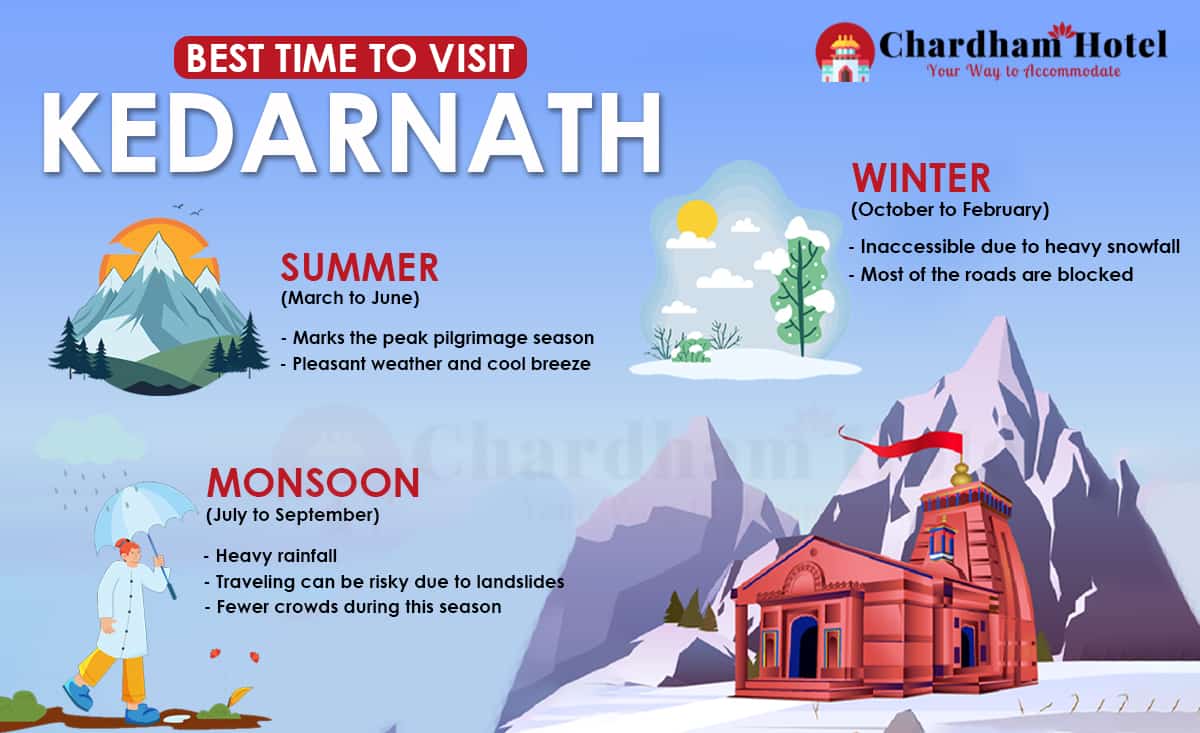
Kedarnath Dham Temple Weather
- Monsoon (July to September): The monsoon season in the Kedarnath region generally runs from July to mid-September, bringing regular rainfall and an increased risk of landslides and travel disruptions. Temperatures remain cool during the monsoon, but conditions can change quickly with rainfall, cloud cover and altitude.
- Summer (May to June): Summer marks the peak pilgrimage season in Kedarnath with pleasant weather and cool breeze. Summer brings relatively pleasant daytime conditions with a moderately cold climate, although mornings, evenings and nights can remain chilly because of Kedarnath’s high altitude.
- Winter (October/November to April): Kedarnath is inaccessible during the winter due to heavy snowfall because of which most of the roads are blocked. During the winter, Kedarnath experiences heavy rainfall and temperatures go below sub-zero levels. During winter, the symbolic Utsav Doli of Lord Kedarnath is carried from Kedarnath to Omkareshwar Temple in Ukhimath, where the winter worship is performed until the shrine reopens.









Kedarnath Weather & Best Time Month-Wise
| Month | Conditions | Recommendation |
|---|---|---|
| April | Very cold; pilgrimage season begins toward the end | Opening-season travel, subject to official date/weather |
| May | Cold to pleasant | Excellent for Yatra |
| June | Cool; peak pilgrimage period | Excellent but crowded |
| July | Monsoon | Travel with caution |
| August | Heavy monsoon conditions possible | Generally avoid if flexible |
| September | Post-monsoon; cooler | Good |
| October | Cold; possible early snowfall | Good until temple closure |
| November | Winter transition; temple generally closed | Not for normal darshan |
| December–March | Heavy snowfall; temple closed | Not suitable for normal Yatra |
Official sources broadly identify May–October as the best visiting window, while BKTC divides the seasons into May–June summer, July–mid-September monsoon and October–April winter.
Best Month to Undertake the Kedarnath Yatra
May and June are the best months to undertake the Kedarnath Yatra as the weather remains pleasant making it comfortable to visit the shrine. During the monsoon (July to mid-September), you should avoid visiting Kedarnath as due to landslides and heavy rains the roads could be blocked. The roads become slippery due to rainfall making it unsafe to travel.
During winter, the temples are closed due to heavy snowfall, and the main deity of Kedarnath Temple is transferred to Ukhimath. If you decide to travel in monsoon stay cautious and pack right.
Best Time to Visit Kedarnath to Avoid Peak Crowds
If you want to avoid the busiest part of the pilgrimage season, late September and October can be considered, subject to the temple’s annual closing date and weather conditions. These months can bring colder temperatures and occasional snowfall at higher elevations, but snowfall is not guaranteed.
Also Read:
Is it Safe to Travel to Kedarnath
Kedarnath can be visited safely when the temple is open and travellers follow official weather, road and pilgrimage advisories. Because the route involves high altitude and challenging Himalayan terrain, conditions can change quickly, especially during monsoon and early winter.
What Effect Does the Temperature and Weather of Kedarnath Have on Pilgrims?
- Health Concerns: Kedarnath is located at around 3,580–3,584 metres above sea level, so some pilgrims may experience altitude-related symptoms, particularly if they ascend too quickly. Headache, nausea, dizziness, unusual fatigue and breathlessness can be warning signs of altitude illness. Stay hydrated, avoid overexertion and seek medical help if symptoms become severe or worsen.
- Physical Discomfort: Due to cold weather and challenging terrain pilgrims often feel uneasy while navigating the challenging paths that take them to the Kedarnath Temple. In severe conditions, you may also have to deal with frostbite. Don’t ignore the common signs and symptoms of altitude sickness, such as nausea, headache, or breathlessness.
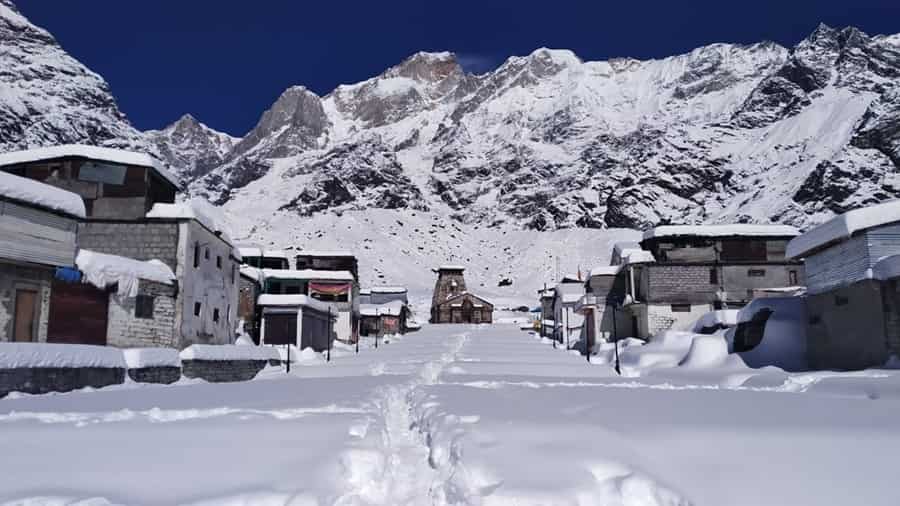
- Limited access: During the extreme weather, the pathway to Kedarnath Temple can be difficult to access as everything gets covered in snow. Sometimes, the paths get blocked by snow preventing the pilgrims from reaching the temple.
- Travel-Related Troubles: The pathways that lead to Kedarnath Temple get very hazardous due to icy conditions and heavy snowfall. You may have to face lots of troubles due to bad weather conditions while trying to reach the temple. Road travel to the lower base areas and the trek from Gaurikund can become difficult because of heavy rain, landslides, snow and slippery conditions.
- Trek Distance: The Kedarnath trek begins from Gaurikund. Depending on the route and measurement used, official Uttarakhand sources describe the trek as roughly 16–19 km; travellers should be prepared for a long, steep high-altitude hike.
Tips to Deal with Kedarnath Dham’s Extreme Weather Conditions
- Check Weather Updates: Before starting your Kedarnath yatra, check weather updates and forecasts. This will help you stay aware of the challenges that you might have to face during the yatra and prepare better for the journey.
- Stay hydrated, but consume only clean water: The high-altitude and cool environment of Kedarnath can cause dehydration. It is important to drink plenty of water throughout the journey. However, do not drink water directly from rivers, streams, or any other water source. The water may seem to be clean but can have contaminants or bacteria that can cause illness. You’re advised to use water purification tablets or bottled water.
- Pack Wind Proof Clothes: The weather in Kedarnath can be unpredictable even during the summers. You’re advised to pack wind-proof layers to keep off the cold winds. A windproof jacket and other protective layers will help you stay warm even during adverse weather conditions.
- Sun Protection: Apply a high SPF sunscreen every four to five hours to protect yourself from harmful UV rays. Even at high altitudes, it can be sunny during the day so you’re advised to wear head protection and sunglasses to stay away from sunburn and heat rashes.
- Keep an Eye on Weather Changes: Since Kedarnath is situated at a high altitude there can be sudden weather changes. If weather warnings are issued, you should move toward a lower-altitude or designated safe area and follow instructions from local authorities or rescue personnel.
Season-Specific Things to Carry while Visiting Kedarnath Dham
- Winter: Kedarnath Temple remains closed during winter, so normal pilgrimage is not available. If you are travelling to lower-altitude winter destinations such as Ukhimath, pack warm layers, thermal clothing, gloves, waterproof footwear and other cold-weather essentials.
- Monsoon: Carry a waterproof rain jacket or poncho, water-resistant footwear with good grip, quick-drying clothes, a waterproof backpack cover and protective bags for electronics and important documents. Trekking poles can also provide additional stability on slippery sections.
- Summer:However, do not rely only on light clothing because Kedarnath remains cold at high altitude. Carry warm layers, a waterproof outer layer, sunglasses, sunscreen and a reusable water bottle.
FAQs
Q-1: When is the best time to visit Kedarnath Temple?
Ans: May and June are among the most popular months for Kedarnath Temple darshan because the shrine is open and weather conditions are generally favourable. Late September and October can also be good, especially for travellers who prefer the post-monsoon period, but conditions become colder and the temple’s annual closing date must be checked.
Q-2: When should you avoid visiting the Kedarnath Temple?
Ans: July to mid-September requires extra caution because heavy rainfall can cause landslides, road disruptions and slippery trekking conditions. If travelling during this period, check the latest weather, road and official pilgrimage advisories before departure.
Q-3: When does Kedarnath Temple remain closed?
Ans: Kedarnath Temple generally closes for the winter around October or November and reopens in April or May. The exact dates vary each year according to the religious calendar. In 2026, Kedarnath Dham opened on April 22. During winter, Lord Kedarnath’s symbolic Utsav Doli is worshipped at Omkareshwar Temple in Ukhimath.
Suggested to Read:


 Call
Call Enquiry