
Planning the Badrinath Yatra in 2026? Here is the one fact that changes everything: the temple Kapat opened on 23 April 2026 at 6:15 AM, and the expected closing is around 13 November 2026. That’s your window — roughly six and a half months. Miss it, and you wait a full year.
Badrinath Dham sits at 3,133 metres (10,279 feet) in the Chamoli district of Uttarakhand, dedicated to Lord Vishnu in his Badri Narayan form. One of the four sacred Char Dham pilgrimage sites, it draws millions of devotees each yatra season. But this is high Himalayan terrain — the weather here does not behave like anything in the plains. Getting the timing wrong means poor road conditions, landslide risk, sub-zero nights, or a closed temple.
This guide — updated with verified 2026 dates, new BKTC rules, and ground-level travel advice — covers everything a pilgrim or tourist genuinely needs before booking.
Best Time to Visit Badrinath in 2026: At a Glance
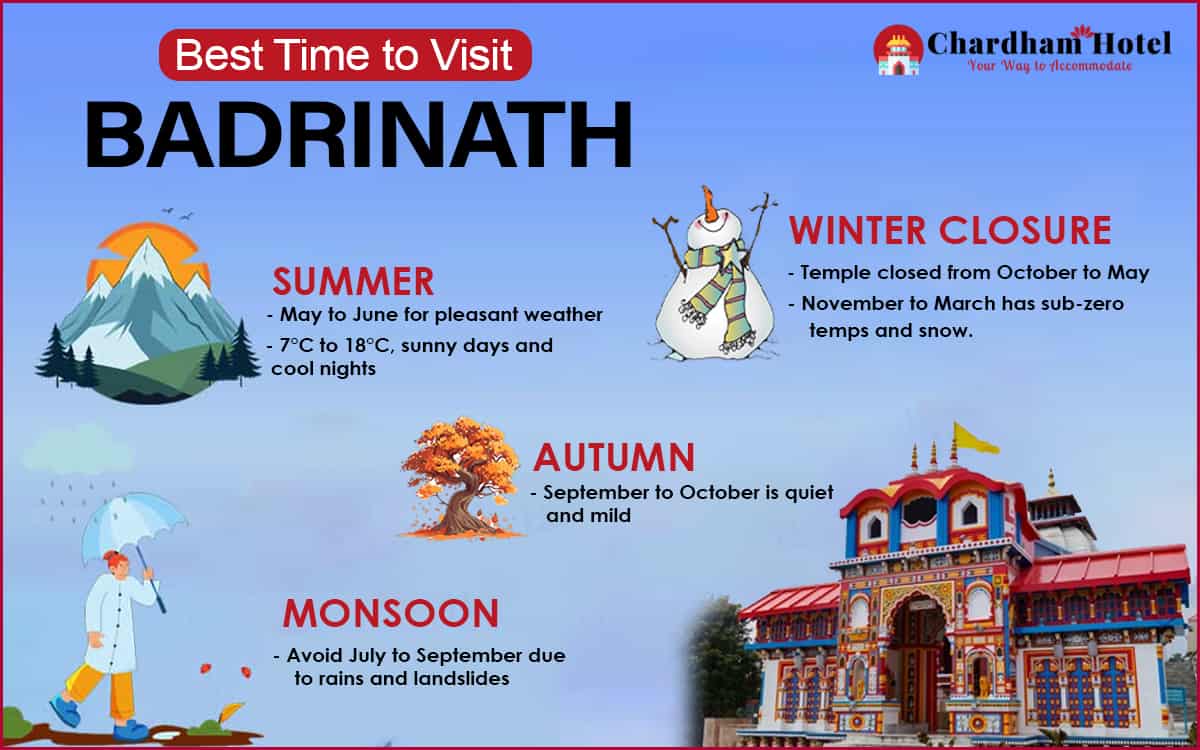
The best time to visit Badrinath Dham in 2026 is mid-May to mid-June for pleasant weather and peak spiritual atmosphere, or mid-September to late October for fewer crowds and crisp autumn conditions.
| Visit Window | Temperature | Ideal For |
| Late April (23 Apr+) | 5°C – 12°C | Opening darshan, spiritual first-movers; cold & crowded |
| Mid-May to June ⭐ Best | 7°C – 20°C | First-timers, families, senior pilgrims; ideal weather |
| July–August ⚠ Avoid | 5°C – 15°C | Monsoon; landslide risk; travel not recommended |
| Sep–Oct ⭐ Best | 5°C – 15°C | Trekkers, solo pilgrims; low crowd, clear skies |
| November (closing) | −5°C – 5°C | Season end; Kapat Bandh ceremony worth attending |
| Dec–March ❌ Closed | −10°C to 0°C | Temple shut; entire region snowbound |
Official Opening Date, Timings & New Rules
The opening date was decided on Basant Panchami (23 January 2026) at the Royal Court of Tehri Naresh in Narendranagar, following Vedic astrological calculations and the Gadu Ghada sesame oil ceremony.
| Detail | 2026 Confirmed Information |
| Kapat Opening Date & Time | 23 April 2026 at 6:15 AM |
| Expected Closing Date | ~13 November 2026 (Bhai Dooj) |
| Nirmalya (First) Darshan | 4:30 AM – 6:30 AM |
| General Darshan (Morning) | 6:30 AM – 1:00 PM |
| Temple Break (Bhog & Rituals) | 1:00 PM – 4:00 PM (closed) |
| Evening Darshan | 4:00 PM – 9:00 PM |
| Maha Abhishek Aarti | 4:30 AM (daily) |
| Shayan Aarti | 8:30 PM (daily) |
| Mobile Phones (2026 NEW RULE) | BANNED beyond Singh Dwar (70m radius); deposit at cloakroom outside |
| General Darshan Fee | FREE (no charge for general darshan) |
| Winter Abode of Deity | Narasimha Temple, Joshimath (Nov–Apr) |
| Yatra Registration | FREE & Mandatory | registrationandtouristcare.uk.gov.in |
| ⚠ NEW RULE FOR 2026 — Read Before You Visit:
The Badrinath Kedarnath Temple Committee (BKTC) has announced a strict ban on mobile phones and cameras within 70 metres of the temple (beyond Singh Dwar). Cloakrooms are available outside for depositing devices. This was implemented after repeated incidents of reel-making and photography disrupting darshan in 2025. Violators face immediate removal from the premises. |
Understanding Badrinath’s Climate – What You’re Actually Dealing With
At over 3,100 metres altitude, Badrinath’s weather is unlike anything in India’s plains or even mid-hill stations. Summers here mean temperatures that would feel like January in Delhi. Winters mean survival conditions — the whole town empties out.
Three seasons matter:
- Summer / Pilgrimage Season (April–June): The main window. Manageable temperatures, clear roads, open temple. Peak crowd in May–June.
- Monsoon (July–mid September): Heavy rain, landslide risk on NH-7 (the main highway to Badrinath). The temple technically stays open, but reaching it becomes genuinely unpredictable.
- Winter (October–April): Temperatures drop sharply after mid-October. By November, the entire area is sealed under snow. The Kapat (temple doors) close on Bhai Dooj each year.
What most people don’t realize: Badrinath has no year-round residents. It’s a seasonal town. After the Kapat closes, even the priests leave. The entire infrastructure shuts down until spring.
Month-Wise Weather, Temperature & Travel Advice
| Month | Temperature | Conditions | Practical Advice |
| April | 5°C – 15°C | Cold, clear | Kapat opens 23 Apr. First 10 days: heavy crowd, cold, late snow possible. Go if opening darshan is your goal. |
| May | 7°C – 18°C | Mild, sunny | Best month overall. Himalayan views at their finest. Book hotels 6–8 weeks ahead. High foot traffic. |
| June | 8°C – 20°C | Warm days | Comfortable weather. Peak pilgrimage rush. Last reliable month before monsoon. Roads fully open. |
| July | 5°C – 15°C | Heavy rain | Monsoon active. Frequent landslides on NH-7 near Chamoli/Joshimath. NOT recommended for travel. |
| August | 5°C – 15°C | Wet, risky | Monsoon peak. Road closures common. Check SDRF/NDRF advisories before departure. |
| September | 5°C – 15°C | Clearing up | Skies clear after mid-September. Beautiful post-monsoon landscape. Crowd thins significantly. |
| October | 1°C – 14°C | Crisp, cold | Autumn colours. Low crowd. Closing ceremony (Kapat Bandh) in early November. Book fast – limited slots. |
| November | −5°C – 5°C | Very cold | Temple closes ~13 Nov 2026 (Bhai Dooj). Only for Kapat Bandh ceremony attendance. |
| Dec–March | −10°C to 0°C | Snowbound | Temple and roads completely closed. No access possible. |
Season-by-Season: What’s It Like on the Ground?
Late April to Early May: The Opening Rush
The days immediately after 23 April see some of the most intense pilgrimage energy of the year. Devotees who want to be among the first to seek darshan of Lord Badri Vishal post-winter — after six months of silence — arrive in huge numbers. This is Akshaya Tritiya season, considered one of the most auspicious periods in the Hindu calendar.
On the ground: temperatures between 5°C and 12°C, occasional residual snow on higher stretches near the temple, and hotels under maximum pressure. If being there for the opening is your spiritual goal, plan for cold weather and carry very warm clothing. If comfort matters more, push your visit to late May.
Mid-May to June: The Sweet Spot
This is the best time to visit Badrinath for most pilgrims — especially families and those making the journey for the first time. Temperatures climb to a comfortable 7°C–20°C during the day, the snow on Neelkanth Peak (6,597 metres, directly behind the temple) gleams against clear blue skies, and all roads from Haridwar and Rishikesh are fully operational.
One mistake many people make: they delay hotel booking, assuming availability will be fine. Badrinath has limited accommodation — a few dozen properties of varying quality. In peak May–June, good rooms near the temple sell out weeks in advance. Book at least 6–8 weeks ahead through a verified operator.
- Ideal for: First-time pilgrims, families with children, senior citizens
- Pack: Warm layers for evenings (temperatures drop sharply after sunset, even in June)
- Crowd level: High — arrive at the temple before 6:30 AM for the shortest queues
July–August: Travel at Your Own Risk
The monsoon arrives with full force. NH-7 (formerly NH-58 — the Rishikesh to Badrinath highway) passes through the Chamoli and Rudraprayag districts, which are among the most landslide-prone stretches in the Himalayas. A single overnight downpour can block the road for 6 to 12 hours. Sometimes longer.
The temple stays open during monsoon, but reaching it is the problem. The Uttarakhand State Disaster Response Force (SDRF) issues regular travel advisories. If July–August is your only window, monitor the official Uttarakhand Traffic Police portal and the Tourist Care Uttarakhand app for daily road status before you move.
September–October: The Hidden Gem Window
By mid-September, the monsoon clouds clear and the mountains open up fully. The Alaknanda flows crystal clear, the valley turns rich green, and foot traffic drops significantly compared to the May–June peak. For those who want a quieter, more introspective pilgrimage — a real darshan without rushing — this is the time.
October adds autumn colour to the slopes around Badrinath and Joshimath. Days remain pleasant (5°C–14°C), but evenings get cold fast. The closing season creates its own spiritual urgency — the awareness that the doors will shut for another six months lends the visit a distinct emotional weight.
- Ideal for: Experienced trekkers, solo travellers, repeat pilgrims
- October specific: Witness the Kapat Bandh (closing ceremony) — a moving sacred event rarely seen by most pilgrims
2026 season is already one of the busiest in five years — over 17.8 lakh pilgrims registered by mid-April. Peak May–June slots are filling fast. If your travel window falls in these months, booking now is the right call.
Frequently Asked Questions
Q1. When does Badrinath Temple open in 2026?
The Badrinath Kapat opened on 23 April 2026 at 6:15 AM. The date was announced on Basant Panchami (23 January 2026) following Vedic astrological calculations at the Tehri Royal Court in Narendranagar.
Q2. What is the best time to visit Badrinath Dham in 2026?
Mid-May to mid-June for the best weather and full spiritual atmosphere. September to mid-October for fewer crowds and scenic post-monsoon beauty. Both windows are excellent for different reasons.
Q3. When will Badrinath temple close in 2026?
The expected closing date is approximately 13 November 2026, on Bhai Dooj. The exact date is officially announced on Vijayadashami (Dussehra). In 2025, the temple closed on 25 November.
Q4. Is registration mandatory for Badrinath Yatra 2026?
Yes — completely mandatory and free. Register at registrationandtouristcare.uk.gov.in, via the Tourist Care Uttarakhand app, or WhatsApp ‘YATRA’ to +91-8394833833. Without a QR e-pass, you will be turned back at checkpoints in Rishikesh, Joshimath, and Pandukeshwar.
Q5. Are mobile phones allowed inside Badrinath Temple in 2026?
No. The Badrinath Kedarnath Temple Committee (BKTC) has banned mobile phones and cameras beyond Singh Dwar (within 70 metres of the temple). Cloakrooms are available outside for depositing devices. This is a strict new rule for 2026.
Q6. What is the VIP darshan price at Badrinath in 2026?
General darshan is free. Basic VIP priority entry costs ₹300–₹500 per person. The Maha Abhishek Puja (closest access to the sanctum) costs ₹4,700–₹5,500 per person. Book only through badrinath-kedarnath.gov.in — do not pay WhatsApp agents.
Q7. Can I visit Badrinath during monsoon (July–August)?
The temple stays open, but the mountain roads are vulnerable to landslides during this period. Travel is not recommended unless you are comfortable with unpredictable road conditions and potential multi-day delays. Monitor SDRF travel advisories before departing.
Q8. What are the darshan timings at Badrinath Temple in 2026?
Nirmalya Darshan: 4:30–6:30 AM. General Morning Darshan: 6:30 AM–1:00 PM. Temple closed for bhog and rituals: 1:00–4:00 PM. Evening Darshan: 4:00–9:00 PM. Maha Abhishek Aarti: 4:30 AM daily. Shayan Aarti: 8:30 PM daily.
Q9. How far is Badrinath from Haridwar and Delhi?
Badrinath is approximately 320 km from Haridwar (10–12 hours by road) and 525 km from Delhi (14–16 hours). Breaking the journey with overnight halts at Haridwar/Rishikesh and Joshimath is strongly recommended.
Q10. Is acclimatisation required before visiting Badrinath?
Yes. Badrinath is at 3,133 metres altitude. Spend at least one night at Joshimath (1,875 m) before ascending. This reduces the risk of Acute Mountain Sickness (AMS) significantly. Medical certificates are mandatory for pilgrims above 65 and below 12 years of age.
Q11. Is helicopter service available to Badrinath in 2026?
Yes. Helicopter packages operate from Sahastradhara Helipad, Dehradun, at approximately ₹80,000–₹1,50,000 per person for the Badrinath sector (30–45 minute flight). Helicopter passengers must also complete the mandatory Yatra registration.
Q12. Where is Lord Badrinarayan worshipped during winter?
After the Kapat close in November, the idol of Lord Badrinarayan is moved to the Narasimha Temple in Joshimath, where worship continues through winter. Pilgrims unable to visit during the pilgrimage season can seek darshan at Joshimath year-round.
Q13. What is the correct order for Char Dham Yatra?
The traditional and recommended order is: Yamunotri (first) → Gangotri → Kedarnath → Badrinath (last). In 2026, all four shrines opened between 19–23 April.
Q14. Can I perform Pind Daan at Badrinath?
Yes. Brahma Kapal ghat on the Alaknanda River near the temple is one of India’s most sacred sites for ancestral Pind Daan rituals. No advance booking is needed. Priests are available throughout the pilgrimage season.
Final Word
Badrinath is not just a destination. For millions of Hindu devotees, a visit to this shrine is a lifetime goal — a moment of standing before Lord Badri Vishal with the Neelkanth Peak rising behind the temple at dawn, the Alaknanda roaring below, and the smell of incense cutting through Himalayan cold.
The 2026 season is the busiest in five years. The Kapat is open, the roads are running, and the mountains are waiting. But the window is only six months — and good hotels, VIP darshan slots, and yatra registrations are going fast.
Plan properly. Register early. Book verified accommodation. Follow the new 2026 rules (especially the mobile ban). And go.


 Call
Call Enquiry