
Badrinath is one of four sacred temples in the Char Dham pilgrimage circuit located in Uttarakhand. At 3,133 meters elevation in Chamoli district, it stands as one of India’s most significant pilgrimage destinations. The journey requires both physical preparation and mental readiness due to high altitude and challenging terrain.
Quick Answer
The best time to visit Badrinath is May-June or September-October when weather is stable and roads are accessible. Most pilgrims complete the journey in 3-5 days from Delhi. Budget ₹15,000-32,000 per person depending on comfort level. Government registration on the Uttarakhand portal is mandatory. The temple opens 23 April 2026 and closes in mid-November. Plan 2-3 months ahead for peak season travel.
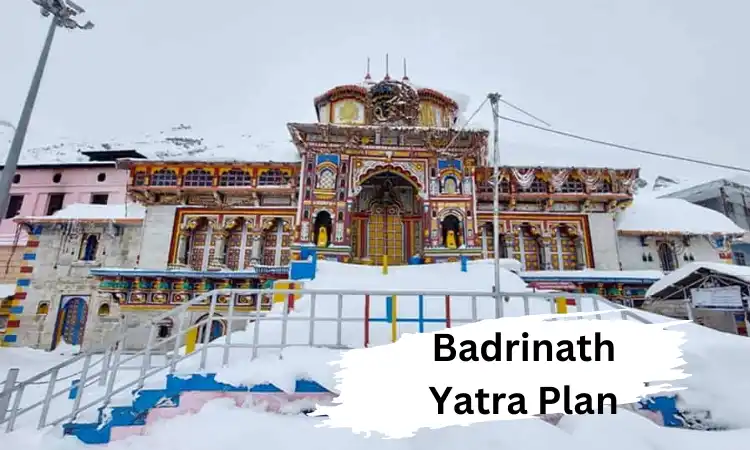
Best Time to Visit Badrinath in 2026
Peak Season: May to June
- Weather: 10°C-25°C daytime, below 5°C nights
- Roads: Fully accessible
- Crowds: Heavy
- Accommodation: Books out 2-3 months in advance
- Prices: 30-50% higher than off-season
- Best for: First-time visitors seeking guaranteed access
Post-Monsoon: September to October
- Weather: 8°C-20°C with green landscapes
- Roads: Mostly clear; occasional weather-related repairs
- Crowds: Moderate
- Prices: 20% cheaper than peak season
- Best for: Budget-conscious travelers preferring fewer crowds
Avoid: July-August & November-March
July-August: Monsoon brings heavy rainfall, landslides, and reduced visibility. Roads experience frequent temporary closures.
November-March: Snow closes the temple and access roads entirely.
Temple Opening 2026: 23 April 2026 (Badrinath Dham Kapat Opening Date – BKTC confirmed)
Temple Closing: Mid-November 2026
How to Reach Badrinath from Delhi
Option 1: Air + Road (11-13 hours, ₹8,000-20,000)
- Flight: Delhi → Dehradun (Jolly Grant Airport), 2 hours
- Road: Dehradun → Haridwar → Rishikesh → Guptkashi → Badrinath (~340 km, 8-10 hours)
- Best for: Time-conscious travelers; requires advance flight booking
Option 2: Train + Road (14-16 hours, ₹2,000-3,500)
- Train: Delhi → Haridwar or Rishikesh (4-5 hours daytime, 5-7 hours overnight)
- Road: Haridwar → Badrinath (~320 km, 10-12 hours)
- Best for: Budget pilgrims; overnight train saves accommodation costs
- Shared cab cost: ₹800-1,200 per person
Option 3: Road Only (14-16 hours, ₹1,500-2,500)
- Route: Delhi → Rishikesh → Guptkashi → Badrinath (~297 km Rishikesh to Badrinath)
- Typical arrangement: Split into 2 days with overnight stop in Guptkashi or Joshimath
- Best for: Budget travelers with flexible schedules
Verified Distances (Chamoli District Government):
- Rishikesh to Badrinath: ~297 km
- Haridwar to Badrinath: ~320 km
- Dehradun to Badrinath: ~340 km
Important Note: The standard Badrinath route from Rishikesh goes through Guptkashi and Joshimath. Since Badrinath is at 3,133 meters, spending one night at an intermediate elevation (1,500-2,000m) like Guptkashi or Joshimath allows your body to acclimatize gradually, reducing the risk of altitude-related discomfort.
Mandatory Registration
Government registration is compulsory for all Badrinath pilgrims.
- Visit registrationandtouristcare.uk.gov.in/
- Enter: Name, age, contact, valid ID (Aadhaar/passport), health status
- Save or print the confirmation receipt
- Present receipt at police checkpoints during your journey
Required Documents:
- Valid ID proof (Aadhaar, passport, or driving license)
- Contact number and email
- Health declaration
- Emergency contact details
Timing: Registration opens 2-3 months before the season. Complete registration 2-3 weeks before travel. The process takes 10-15 minutes online.
Budget Breakdown (4-5 days, per person)
| Category | Budget | Mid-Range | Premium |
|---|---|---|---|
| Transport (Delhi-Badrinath) | ₹2,000-3,000 | ₹4,000-6,000 | ₹8,000-12,000 |
| Accommodation (3 nights) | ₹6,000-7,500 | ₹12,000-18,000 | ₹20,000-30,000 |
| Meals (4-5 days) | ₹2,000-3,000 | ₹3,500-5,000 | ₹6,000-8,000 |
| Local transport & extras | ₹1,000-2,000 | ₹2,000-3,000 | ₹3,000-5,000 |
| Total per person | ₹11,000-15,500 | ₹21,500-32,000 | ₹37,000-55,000 |
Accommodation Options in Badrinath:
- GMVN Hotel Badrinath: Government-run, basic rooms, approximately ₹2,000-2,500 per night (rates vary by season and room category)
- Badrinath Sarovar Portico: Mid-range with better amenities, approximately ₹4,000-6,000 per night
- Himalayan Abode: Guesthouse-style, family-run, approximately ₹3,000-4,000 per night
Note: Accommodation rates vary seasonally and by room category. Check current availability and pricing on booking platforms before reserving.
Backup Options: If Badrinath is full, nearby towns like Guptkashi (65 km away) and Joshimath (50 km away) offer more availability.
- Suggested Package: Badrinath Yatra Packages
Essential Preparation
What to Pack
Clothing: Warm fleece or wool jacket, thermal underwear, long-sleeve shirts, trekking trousers, comfortable walking shoes, hat, gloves, scarf, rain jacket
Health & Medications: Prescription medicines, altitude-sickness remedies (consult your doctor), pain relievers, cold medicine, sunscreen (SPF 50+), lip balm with SPF, first-aid kit with bandages and antiseptic cream
Documents & Essentials: Valid ID, registration confirmation, travel insurance (optional but recommended), phone charger, powerbank, cash backup (ATMs in Badrinath may run out during peak season; carry ₹5,000-10,000 minimum)
Health Considerations at 3,133m
Altitude Acclimatization: At 3,133 meters, some visitors experience altitude discomfort including headache, nausea, and fatigue. These symptoms typically resolve within 24 hours with adequate rest, hydration, and time. Serious symptoms (severe headache, confusion, difficulty breathing) require immediate descent.
Acclimatization Strategy:
- Spend one night at intermediate elevation (Guptkashi, 1,500m or Joshimath, 1,890m) before reaching Badrinath
- Drink 3-4 liters of water daily
- Avoid heavy meals on your first day at altitude
- Don’t overexert yourself on arrival day
- Get adequate sleep
Who Should Consult Doctors Before Travel:
- Adults over 60
- People with heart, lung, or kidney conditions
- Those with uncontrolled blood pressure
- Pregnant women (not recommended above 2,500m)
Medical facilities at Badrinath are limited to a small primary health center. Serious emergencies require helicopter evacuation to Dehradun or Guptkashi, which is weather-dependent and subject to availability. Evacuation costs vary; verify evacuation coverage with your travel insurance provider.
Temple Darshan Timing
The Badrinath Temple follows a daily worship schedule that includes multiple puja windows. According to the Badrinath Kedarnath Temple Committee (BKTC), the typical schedule includes:
- Morning Abhishek (ritual bathing): 4:30–6:30 AM
- Day worship periods: 7:30 AM–12:00 PM and 3:00–6:00 PM
- Evening Aarti: 6:00–7:45 PM
Important: Darshan timings may vary based on seasonal considerations and special festivals. Check the latest BKTC official schedule or contact the Yatra Control Room before your visit.
Emergency Contact: Tourist Care Uttarakhand – 1077 (toll-free number)
5-Day Sample Itinerary
| Day | Activity | Duration |
|---|---|---|
| 1 | Delhi → Haridwar/Rishikesh (by train or car) | 4-5 hours |
| 2 | Haridwar/Rishikesh → Guptkashi or Joshimath (acclimatize) | 6-7 hours |
| 3 | Guptkashi/Joshimath → Badrinath (high altitude temple town) | 5-6 hours |
| 4 | Badrinath darshan and nearby site visits | Full day at 3,133m |
| 5 | Badrinath → Return journey to Delhi | Return travel |
Nearby Attractions:
- Mana Village (4 km walk): India’s last inhabited village before Tibet border; includes Panch Prayag shrine
- Brahma Kapal (2 km walk): Spiritual ritual site overlooking the Alaknanda River; 30-minute accessible walk
- Vasudhara Falls (6 km, difficult trek): Only for experienced trekkers; 4-hour trek at high altitude
Common Mistakes to Avoid
- Skipping acclimatization: Don’t travel directly from Delhi (250m) to Badrinath (3,133m) in one day. Stop at an intermediate location like Guptkashi or Joshimath to allow your body to adjust.
- Forgetting registration: Complete online registration 2-3 weeks before travel. Checkpoints enforce this requirement.
- Underpacking warm clothing: Even in May-June, temperatures drop below 5°C at night. Inadequate clothing causes significant discomfort.
- Underestimating travel time: 10-hour journeys often take 12-14 hours due to traffic, road conditions, and weather delays. Start early and allow extra time.
- No cash backup: ATMs in Badrinath may run out during peak season. Carry cash as backup.
- Ignoring personal fitness limits: Be honest about your physical condition. If you have knee, heart, or breathing issues, consult your doctor before travel and plan a slower pace.
Frequently Asked Questions
Q: What’s the best time to visit with children?
A: May-June offers the most comfortable weather. Children 10 and older typically manage well with proper acclimatization and pacing. Younger children may find the altitude and physical demands challenging.
Q: Can I visit Badrinath during monsoon (July-August)?
A: Not recommended. Heavy rainfall causes landslides and frequent road closures. Many travelers experience delays or get temporarily stranded.
Q: How physically fit do I need to be?
A: You should be able to comfortably walk 2-3 km uphill on relatively flat terrain. The main activity at Badrinath is walking to the temple for darshan (modest distance). The biggest physical challenge is the altitude itself.
Q: What if bad weather closes the road while I’m there?
A: Roads occasionally close temporarily due to landslides or snow. If stranded in Guptkashi, roads typically reopen within 1-2 days. You can use the time to explore nearby temples or visit Kedarnath instead.
Q: Are women safe traveling to Badrinath?
A: Yes. Thousands of women pilgrims visit annually, both solo and in groups. Shared cabs and group travel are standard and generally safe. Follow normal travel safety practices.
Q: Can seniors visit Badrinath?
A: Yes, many seniors visit successfully. Consult your doctor, especially if you have health conditions. Plan for a slower pace, build in extra acclimatization time, and take rest days as needed.
Q: What if I experience altitude discomfort at Badrinath?
A: Rest, drink water, and avoid exertion. Most symptoms resolve within 24 hours. If symptoms worsen, descend to a lower altitude. Oxygen is available at the temple health center.
Q: Can I visit both Badrinath and Kedarnath in one trip?
A: Yes. The combined Badrinath-Kedarnath pilgrimage typically takes 7-8 days. Both are significant temples in the Char Dham circuit and are usually visited together.
Q: What’s the difference between peak season (May-June) and post-monsoon (September-October)?
A: May-June offers clearer weather and guaranteed access but heavier crowds and higher prices. September-October has moderate crowds, good weather, and lower prices, but occasional rain.
Q: Is travel insurance recommended?
A: Yes, especially if you’re over 50 or have existing health conditions. Get coverage that includes medical evacuation, as serious emergencies require helicopter transport.
Q: Where do I get current 2026 road condition updates?
A: Check the Chamoli District Badrinath Yatra 2026 bulletin and contact Tourist Care Uttarakhand (1077 toll-free) for latest route advisories before departure.
Final Takeaway
Badrinath Yatra is a physically and mentally demanding pilgrimage. Start planning 2-3 months in advance for May-June, or 6-8 weeks for September-October. Book accommodation early, complete registration promptly, and pack properly for high-altitude conditions. The journey from Delhi to Badrinath will test your patience and endurance—but pilgrims who prepare thoroughly and maintain realistic expectations find profound meaning in the effort itself.


 Call
Call Enquiry