
Are you looking for a genuine guide on the best time to plan your Char Dham Yatra in 2026? The time is almost here when the Kapats of the holy shrines open. If you are eagerly waiting for the right time to plan your journey to the four holy shrines — Yamunotri, Gangotri, Kedarnath, and Badrinath — this guide will help you prepare well.
Since the shrines are located amidst the snow-capped ranges of the Himalayas, choosing the right time is extremely important — especially when the weather is favourable and the skies are clear. This is a complete guide on Char Dham weather forecast and temperature for 2026 — updated month by month so you can plan with confidence.
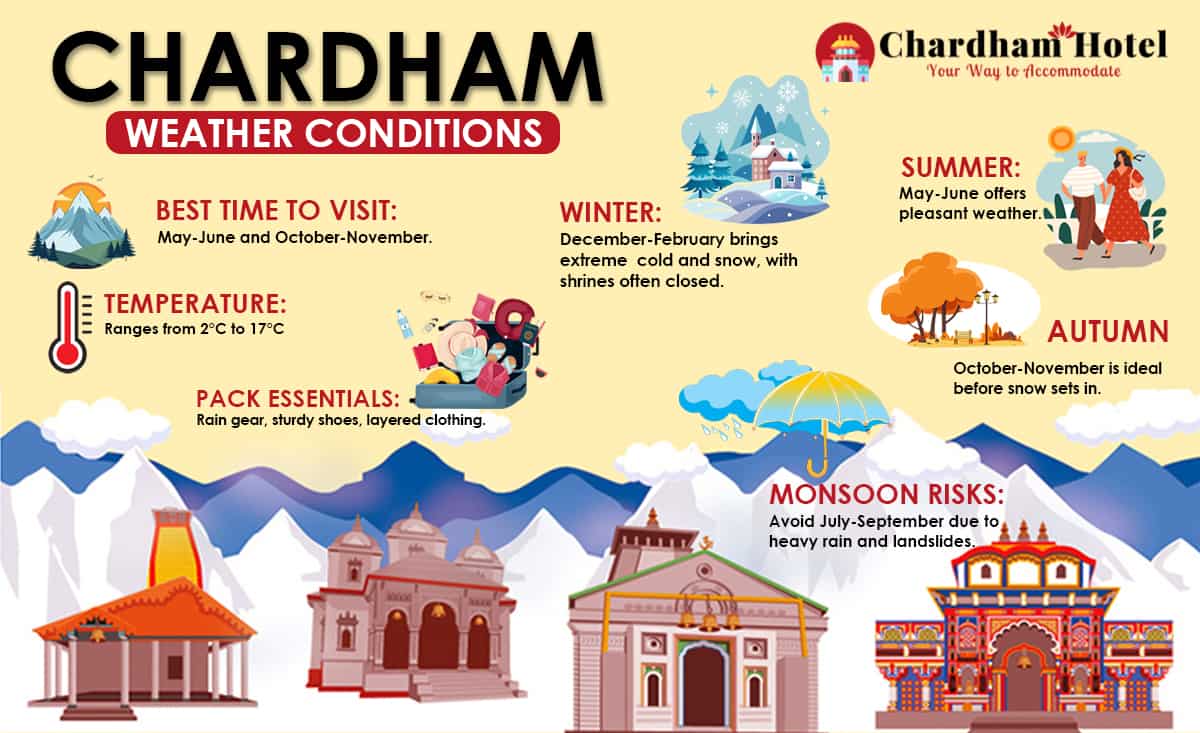
Char Dham 2026 — Opening and Closing Dates
Before planning around weather, confirm the temple windows:
| Temple | Opening Date 2026 | Closing Date 2026 |
|---|---|---|
| Yamunotri | 19th April 2026 (Akshaya Tritiya) | 11 November 2026 (Tentative) |
| Gangotri | 19th April 2026 | 10 November 2026 (Tentative) |
| Kedarnath | 22nd April 2026 | 11 November 2026 (Tentative) |
| Badrinath | 23rd April 2026 | 13 November 2026 (Tentative) |
The temples remain snowbound and inaccessible outside these dates. Plan your Yatra within this window only.
Char Dham Weather Temperature — At a Glance
Every year, the temperature at Char Dhams slightly varies. However, you can predict weather conditions with the average temperatures below.
Temperature in May & June (Summer Season)
| Dham | Min Temp | Max Temp | Condition |
|---|---|---|---|
| Yamunotri | 5°C | 15°C | Pleasant, some cloud cover |
| Gangotri | 6°C | 16°C | Mild and comfortable |
| Kedarnath | 2°C | 12°C | Cold nights, mild days |
| Badrinath | 5°C | 17°C | Pleasant for darshan |
Temperature in September & October (Autumn Season)
| Dham | Min Temp | Max Temp | Condition |
|---|---|---|---|
| Yamunotri | 3°C | 20°C | Clear skies, lower crowds |
| Gangotri | 8°C | 18°C | Excellent visibility |
| Kedarnath | 5°C | 15°C | Crisp air, post-monsoon clarity |
| Badrinath | 8°C | 20°C | Best overall conditions |
Month-by-Month Char Dham Weather Guide 2026
April — Pre-Season (Temples Opening)
- Yamunotri & Gangotri open: 19th April 2026
- Temperature: 2°C–12°C across all four Dhams
- Significant snow on peaks and approach roads — some sections may still be clearing
- Very cold nights — sub-zero at Kedarnath and Gangotri
- Not recommended for first-timers; suitable only for experienced high-altitude pilgrims
May — Peak Opening Season ✅ Excellent
May is one of the best months for Char Dham Yatra — particularly the second half of May after roads and trails have fully cleared.
- Yamunotri: 5°C–15°C. Trek from Janki Chatti is manageable. Surya Kund hot spring bubbles clearly.
- Gangotri: 6°C–16°C. Direct road access. Bhagirathi River visible with clarity.
- Kedarnath: 2°C–12°C. Trek from Gaurikund: cold mornings, mild afternoons. Snow possible on peaks.
- Badrinath: 5°C–17°C. Comfortable darshan. Neelkanth Peak clearly visible.
Tip: First two weeks of May see highest footfall — opening season rush. If you want the auspicious opening energy but fewer crowds, target the 3rd or 4th week of May.
June — Good Season ✅ Good
- Temperature rises slightly — daytime 10°C–20°C across most Dhams
- Kedarnath remains 2°C–15°C — significantly colder than other Dhams
- Highest pilgrim numbers of the season — book accommodation and transport 60–90 days in advance
- Pre-monsoon showers begin in late June — occasional afternoon rain
- Roads and trails fully functional and well-managed
July–August — Monsoon Season ❌ Avoid If Possible
- Heavy rainfall across all four Dhams and connecting roads
- Landslides and road blockages on the Haridwar–Badrinath highway frequent — closures of 12–48 hours not uncommon
- Kedarnath Trek becomes slippery and genuinely risky
- Helicopter services frequently cancelled due to weather
- Temperature remains 10°C–16°C but feels colder due to rain
- If you must travel in this period, keep 2–3 buffer days minimum and monitor uttarakhandtourism.gov.in for road status daily
Note: The Char Dham Yatra remains officially open during monsoon — it is not closed. However, safety risks are significantly higher than in May–June or September–October.
September — Best Overall Season ✅ Best
September is widely considered the best month for Char Dham Yatra:
- Post-monsoon skies are crystal clear — mountain views at their finest
- Temperature: 5°C–20°C across all Dhams — comfortable without being cold
- Crowd levels drop significantly compared to June — darshan queues noticeably shorter
- Roads are fully functional and freshly cleared after monsoon maintenance
- Helicopter services fully operational with fewer weather cancellations
- The landscape is lush green after the rains — visually spectacular
October — Excellent Season ✅ Excellent
- Temperature: 3°C–15°C during day — nights can drop to 0°C or below
- Lower footfall than any other month in the open season
- Crisp, dry air with exceptional mountain visibility
- Snowfall possible on higher peaks — adds to the spiritual atmosphere
- Accommodation readily available, often at lower rates
- Important: Badrinath typically closes in mid-November; Kedarnath on 11th November 2026. October visits are perfectly within the window but book with awareness of closing dates.
November — Closing Season ⚠️ Plan Carefully
- Kedarnath closes 11th November 2026; Badrinath closes 13th November 2026 (tentative)
- Temperature drops sharply — sub-zero nights at Kedarnath and Gangotri
- Some years see early snowfall that affects road access
- The closing ceremonies (Kapat Bandh) are spiritually significant — worth witnessing if you plan carefully
- Not recommended for first-timers or senior citizens without medical advice
Weather Conditions at Each Dham — Detailed Guide
Yamunotri Temple Weather
Summer (May to June): The weather is pleasant with temperatures ranging between 5°C to 15°C during the day. The 6 km trek from Janki Chatti is manageable. The hot Surya Kund spring (approximately 70–90°C — varies seasonally) creates a striking contrast against the cool mountain air. UV intensity at 3,293 metres is significantly higher than at plains level — sunscreen SPF 50+ is essential even on cloudy days.
Monsoon (July to September): Heavy rainfall leads to landslides and makes the journey challenging. The Janki Chatti–Yamunotri trail becomes slippery. Caution is strongly advised. September sees conditions improve dramatically from the second week onward.
Autumn (October to November): Temperature ranges 3°C to 20°C in October. Snowfall may begin in November. This is a peaceful, low-crowd time for darshan. Ideal for pilgrims who want the full Yamunotri experience without the May–June rush.
Gangotri Temple Weather
Summer (May to June): Mild temperatures of 6°C to 16°C create a comfortable environment for pilgrims. Gangotri is motorable — no trek required. The Bhagirathi River is clear and powerful in May from snowmelt.
Monsoon (July to September): Heavy rainfall and landslide risk are common on the Uttarkashi–Gangotri road. Pilgrims travelling during this time must carry rain gear and monitor road conditions daily. September improves from week two onward.
Autumn (October to November): Low temperatures with the approach of winter. The temple area is quiet and atmospheric. Temperature: 8°C–18°C in October. Gangotri typically closes before Kedarnath and Badrinath — confirm closing dates at badrinath-kedarnath.com before planning November travel.
Kedarnath Temple Weather
Kedarnath at 3,583 metres has the harshest weather of all four Dhams and deserves special attention.
Summer (May to June): Daytime temperatures range 5°C to 15°C — mornings and nights can drop to 0°C–5°C even in June. The 16 km trek from Gaurikund is cold at dawn — pilgrims who start at 5 AM face temperatures of 3°C–6°C at Gaurikund itself (1,982m). Pack thermal inner wear regardless of the month. Wind chill at Kedarnath makes the actual felt temperature 3–5°C lower than the recorded figure.
Monsoon (July to September): Intermittent heavy rainfall, risk of landslides on the trek route, and frequent helicopter cancellations. The trek surface becomes slippery and the risk of AMS increases with wet conditions. September week 2 onward sees the most dramatic improvement.
Autumn (October to November): Temperature: -2°C to 12°C in October. Cold but deeply spiritual. The Sandhya Aarti at 7:30 PM in October — with the temple lit against snow peaks and almost no crowd — is an extraordinary experience. Kedarnath closes 11th November 2026.
Badrinath Temple Weather
Summer (May to June): Temperatures between 5°C to 18°C — the most pleasant of all four Dhams in summer. Badrinath is motorable and accessible by road. Neelkanth Peak (6,596m) is clearly visible from the temple courtyard in clear May weather.
Monsoon (July to September): Rainfall is common — Badrinath is accessible by road, which is maintained but can be subject to rockfall and minor closures. Less affected than Kedarnath and Yamunotri. September brings post-monsoon clarity that is remarkable.
Autumn (October to November): Temperature 8°C–20°C in October — arguably the best time to visit Badrinath. The Brahma Kapal ghat, Mana Village, and Vasudhara Falls are all at their most atmospheric. Tentative closing date: 13th November 2026.
Char Dham Season Comparison — At a Glance
| Month | Overall Conditions | Crowds | Helicopter | Best For |
|---|---|---|---|---|
| April | Cold, some snow risk | Very Low | Limited | Experienced pilgrims only |
| May | ✅ Excellent | High | Fully operational | First-timers, families |
| June | ✅ Good | Peak | Fully operational | All pilgrims |
| July | ❌ Monsoon | Medium | Frequent cancellations | Not recommended |
| August | ❌ Heavy monsoon | Low | Unreliable | Avoid |
| September | ✅ Best | Medium-Low | Fully operational | Everyone — best month |
| October | ✅ Excellent | Low | Fully operational | Senior citizens, repeat pilgrims |
| November | ⚠️ Cold, closing | Very Low | Limited | Closing ceremony visitors |
What the Weather Means for Trek Planning
Kedarnath Trek (16 km from Gaurikund) — Weather Impact
| Season | Trek Condition | Recommendation |
|---|---|---|
| May–June | Good — cold mornings, clear afternoons | Start by 5–6 AM to reach before midday clouds |
| July–August | Slippery, rain likely daily | Use pony/palki; helicopter preferred |
| September | Excellent — dry, clear, firm surface | Best trekking conditions of the year |
| October | Good to excellent — cold mornings | Warm clothing essential from base itself |
Yamunotri Trek (6 km from Janki Chatti) — Weather Impact
| Season | Trek Condition | Note |
|---|---|---|
| May–June | Comfortable | Surya Kund is most active in May |
| July–August | Muddy, landslide risk | Caution required |
| September–October | Best conditions | Least crowds on trail |
Don’t Forget to Carry
When you are ready to take off for Char Dham Yatra, ensure you keep the necessary gear:
Clothing:
- Thermal inner wear — top and bottom, 2 sets minimum (even for May–June)
- Fleece jacket or woollen sweater
- Waterproof rain jacket — mandatory July–September, strongly advisable May–June
- Warm socks — 4 pairs minimum
- Woollen cap and gloves — essential for Kedarnath regardless of season
Footwear:
- Sturdy ankle-support trekking shoes — not sneakers or sandals
- One extra pair of dry socks in a waterproof bag
Health and Safety:
- Essential medications and personal daily medicines — carry 3-day extra supply
- Basic first-aid kit including ORS sachets and pain relief
- Pulse oximeter — monitors blood oxygen at altitude (₹800–₹1,200)
- Torch with extra batteries — power cuts are common in mountain towns
- Sunscreen SPF 50+ and UV-protective sunglasses — UV radiation at 3,000–3,500m is 40–50% stronger than at sea level. Cloud cover does not reduce UV risk significantly.
Practical:
- Rain gear — poncho or waterproof cover for bag
- Hydration and nutrition — 3–4 litres of water daily at altitude; sealed bottles only
- Mobile phone — save emergency numbers before departure
- Emergency supplies — energy bars, glucose tablets for trek days
- Cash — ₹3,000–₹5,000 from Haridwar; ATMs unreliable above Rishikesh in peak season
Weather Safety Tips for Char Dham Yatra
Check weather before each travel day. Mountain weather changes within hours. Check uttarakhandtourism.gov.in each morning before starting a mountain drive or trek.
Start trekking early. Begin Kedarnath trek from Gaurikund by 5–6 AM. Weather at Kedarnath deteriorates after noon — afternoon cloud buildup is common from June onward.
Do not travel mountain roads at night. Regardless of weather or season. Darkness, mist, and reduced visibility make Himalayan roads dangerous after sunset.
Altitude sickness symptoms to watch for: Persistent headache, nausea, dizziness, breathlessness, loss of coordination. If any appear — stop ascending, rest, hydrate, and inform your tour manager or medical post.
Medical advice for 50+: Pilgrims above 50 should carry a medical fitness certificate confirming their health for high-altitude travel. Consult your doctor specifically about cardiovascular and respiratory fitness.
Frequently Asked Questions
Q1. What is the best time to visit for Char Dham Yatra?
May to June and September to October — when the weather is pleasant and temple access is safe. September is the single best month overall: post-monsoon clarity, lower crowds, fully operational helicopter services.
Q2. What to expect from Char Dham weather in 2026?
In May–June: Yamunotri 5–15°C, Gangotri 6–16°C, Kedarnath 2–12°C, Badrinath 5–17°C. In September–October: Yamunotri 3–20°C, Gangotri 8–18°C, Kedarnath 5–15°C, Badrinath 8–20°C.
Q3. What are the risks of visiting Char Dham during monsoon?
July–August brings heavy rainfall, frequent landslides, and road closures on the Haridwar–Badrinath highway. Helicopter cancellations are common. The trek to Kedarnath becomes slippery. If you must travel during monsoon, carry full rain gear and keep 2–3 buffer days.
Q4. What is the temperature at Kedarnath in May?
Kedarnath in May: daytime 5°C–12°C, nights can drop to 0°C–4°C. Start the trek in thermal clothing regardless of how warm it seems in Gaurikund below.
Q5. Is October a good time for Char Dham Yatra?
Yes — October is excellent. Clear post-monsoon skies, temperature 5°C–20°C across Dhams, minimal crowds, and fully operational helicopter services. Kedarnath closes 11th November 2026, giving ample time.
Q6. What should I pack for Char Dham Yatra in May?
Thermal inner wear (2 sets), fleece jacket, waterproof rain jacket, warm socks (4 pairs), ankle-support trekking shoes, pulse oximeter, ORS sachets, personal medicines, ₹3,000–₹5,000 cash from Haridwar.
Q7. Why is September considered the best month for Char Dham?
Post-monsoon skies are crystal clear — mountain views at their finest. Roads are freshly maintained. Crowds are significantly lower than June. All helicopter services fully operational. Temperature is comfortable at 5°C–20°C across all Dhams. No active landslide risk.
Q8. Does it snow at Kedarnath in October?
Snow is possible on the higher peaks surrounding Kedarnath in October — particularly the second half. The trail itself usually remains clear for trekking through October. Night temperatures can drop to -2°C to 4°C.
Conclusion
Weather plays a crucial role in making your Char Dham Yatra safe and spiritually meaningful. Whether you are planning for the first time or returning for another season, always check conditions before finalising your travel dates. This month-by-month guide gives you the temperature data and seasonal context to choose the right window — May, September, or October — for the most rewarding journey.


 Call
Call Enquiry
what is the temperature in Char dham in September